

Vein Treatments
Varithena®
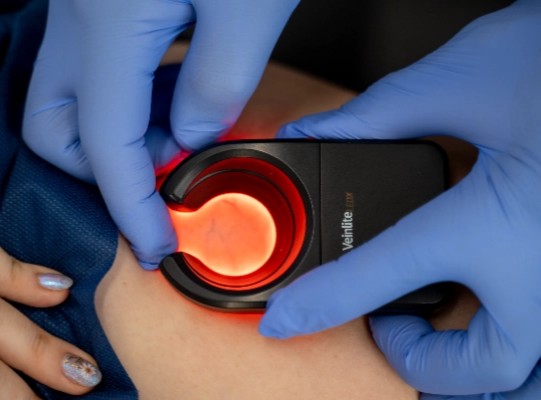
Varithena® (polidocanol injectable foam) 1% is a prescription option from Boston Scientific for adults whose ultrasound shows a leaky valve feeding varicose veins or chronic venous insufficiency. VIP vein doctors use this microfoam to close selected unhealthy veins without heat, incisions, stitches, sedation, or general anesthesia so blood can shift to healthier pathways.
What Is Varithena and How Does It Work?
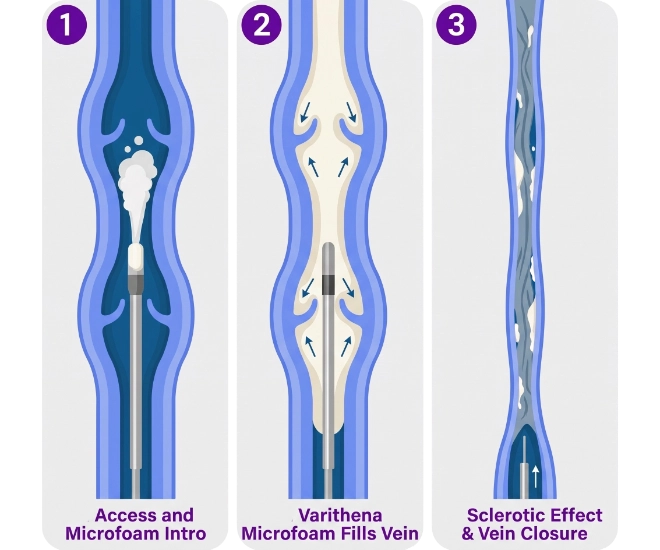
Under ultrasound guidance, a VIP doctor delivers the microfoam into the targeted vein through a catheter or injection. The foam contacts the vein wall, the vein closes, and blood redirects through healthier pathways. The foam then dissipates. Because microfoam can fill irregular vein shapes, it can be useful for some tortuous or shorter segments that are difficult to treat with a thermal catheter.

Effectiveness


Safety

Lasting effects

Procedure time
30-60 min
Recovery
Fast
Downtime
Zero
When VIP Recommends Varithena in the Care Plan
Most VIP plans start by treating the main leaky source vein, then address the veins that remain. Varithena is often that next step when foam can reach segments a heat catheter handles poorly. If anatomy is a poor fit for heat-based treatment, your VIP vein doctor may use Varithena first. Your plan is set after ultrasound and can be adjusted the day of care.
For large varicose veins, VIP often treats the feeding saphenous source first, then reassesses the remaining veins at a follow-up visit. Your vein doctor may suggest Varithena, sclerotherapy or ambulatory phlebectomy for the remaining veins, depending on your anatomy and health history. When an injection approach is chosen, Varithena is generally preferred over standard ultrasound-guided foam sclerotherapy because it works better, not only for bulky varicose veins. Ambulatory phlebectomy may be preferred for a faster result or for patients with higher phlebitis risk (including some who smoke or take tamoxifen).
Your VIP vein doctor will match the sequence to your anatomy, history, goals, and coverage.
Benefits
- Non-thermal, nonsurgical closure of selected refluxing veins
- Useful for tortuous, short, or irregular segments
- In office or at an ambulatory surgery center; most patients return to normal activities quickly
- Can follow ablation as part of a staged plan
- May improve symptoms such as heaviness, aching, swelling, throbbing, and itching, as well as vein appearance
Considerations and Recovery
- Compression stockings and daily walking are required after treatment
- Avoid strenuous exercise for the period your doctor specifies
- The treated vein can feel like an internal scab (irritating or tug-like at times) as it breaks down and softens while the area heals
- Additional sessions may be needed
- Not for patients with known polidocanol allergy or acute thromboembolic disease
Common side effects can include tenderness, bruising, swelling, superficial thrombophlebitis or trapped blood, temporary skin pigmentation, and, less often, deep-vein thrombosis or allergic reaction. Contact your VIP clinic promptly concerning leg pain, swelling, or other urgent symptoms.
Varithena FAQs
What Does Varithena Treat?
Incompetent veins in the great saphenous system and associated varicose veins above and below the knee, confirmed on duplex ultrasound.
How Is Varithena Different From RFA?
RFA closes veins with heat energy and a catheter. Varithena uses prescription microfoam without heat and can suit some short or tortuous segments; it is often sequenced after ablation rather than instead of it. Your vein doctor will explain when each treatment fits in your plan.
Do I Need Compression After Varithena?
Yes. VIP follows post-treatment compression and walking instructions (commonly bandages then gradient stockings for a defined period). Your doctor will confirm the exact schedule.
How Long Does Varithena Treatment Take?
Typically very quick, often taking less than 30 minutes depending on how many veins are treated.
Is Varithena Covered by Insurance?
Coverage is usually available when treatment is medically necessary based on symptoms and ultrasound, though plans differ. VIP verifies benefits before you begin.
Important Safety Information
At VIP Medical Group, Varithena is used only when it fits your ultrasound map and medical history. Do not receive Varithena if you are allergic to polidocanol or if you have acute thromboembolic disease, meaning an active blood-clot condition.
Patients most often notice leg discomfort, bruising, or trapped blood in the treated vein after treatment. Skin color changes may appear for a time. Blood clots and allergic reactions are uncommon but serious; seek care concerning leg pain, swelling, chest symptoms, or signs of allergy.
Possible complications may include those effects. Discuss risks and benefits with your VIP vein doctor before treatment. This summary supports shared decision-making and is not a full prescribing document or a replacement for your consultation.
Let our doctors customize your treatment plan
Finding relief is as simple as filling this quick form below: