

Vein Treatments
VenaSeal™
At select locations, VIP Medical Group offers the VenaSeal™ closure system for adults with symptomatic venous reflux once an ultrasound confirms a leaky vein valve. This option seals an unhealthy leg vein with medical adhesive so blood can travel through healthier vessels without applying heat to the vein wall. Done in office or at an ASC, without general anesthesia.
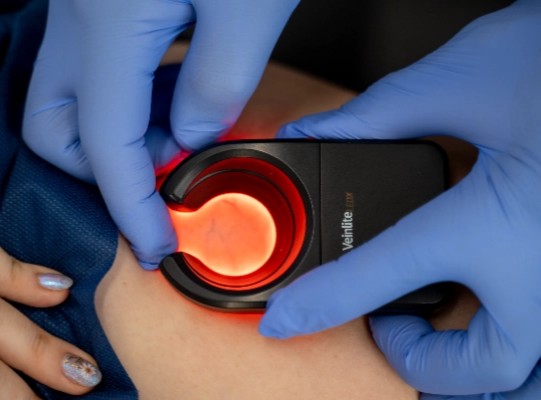
What is VenaSeal?
VenaSeal is an FDA-approved, catheter-based treatment that permanently closes refluxing superficial truncal veins, such as the great saphenous vein. When vein valves fail, blood pools in the legs and can cause aching, heaviness, swelling, throbbing, itching, or varicose veins. Sealing the diseased segment stops backward flow in that vein and supports symptom relief as circulation redirects.

Effectiveness


Safety

Lasting effects

Procedure time
30-60 min
Fast
Recovery
Minimal
Downtime
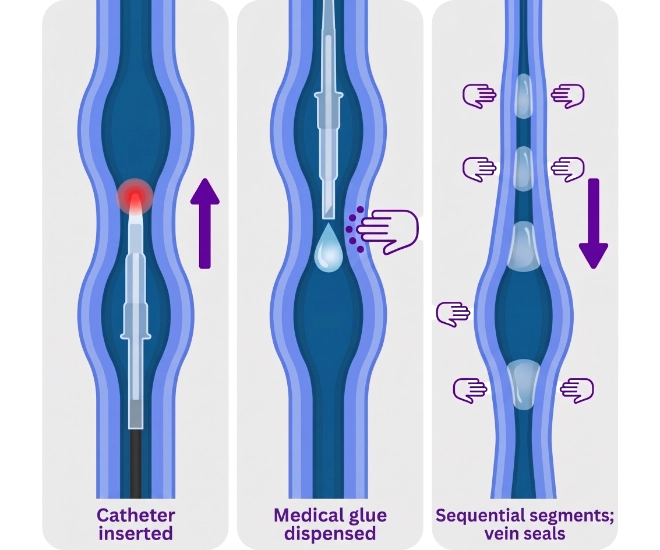
How VenaSeal Works
- Duplex ultrasound maps the vein and confirms reflux.
- Local anesthetic numbs a small entry site.
- Under ultrasound guidance, the vein doctor advances a thin catheter into the vein.
- Measured amounts of medical adhesive are placed along the segment while gentle pressure helps the walls seal.
- The catheter is removed and a small bandage is applied.
The adhesive stays inside the closed vein and becomes surrounded by scar tissue over time. Healthy nearby veins continue to carry blood. Because the method is non-thermal, multiple tumescent injections along the vein are usually unnecessary, and most visits finish in less than one hour.
Benefits of VenaSeal at VIP Medical Group
- Non-thermal closure (no heat energy in the vein)
- Typically one access point instead of many numbing injections along the vein
- In office or at a treatment center without general anesthesia
- Many patients walk soon after and return to routine activity the same day
- Compression stockings may not be required (your clinician will advise)
- Can treat the source refluxing vein as part of a broader VIP care plan
What to expect?
- Compression stockings may not be required after VenaSeal (your clinician will advise)
- Many patients walk soon after and return to routine activity the same day
- You may feel a brief sting when the site is numbed, pressure as the catheter is placed, or mild pulling as adhesive is delivered
- Temporary tenderness, bruising, firmness, or redness near the treated vein can occur as the area heals
- Some patients develop hypersensitivity-type inflammation along the treated vein; it is usually self-limited. Tell your clinic if it is severe or worsening
- Not for patients with hypersensitivity to cyanoacrylate medical adhesives, acute superficial thrombophlebitis, thrombophlebitis migrans, or acute sepsis.
Common side effects can include tenderness, bruising, firmness, redness, or discomfort near the treated vein or access site. Less often, allergic reaction to the adhesive, infection or bleeding at the access site, numbness, scarring, blood clots, or vessel injury may occur.
VenaSeal FAQs
Does insurance cover VenaSeal?
Many plans cover VenaSeal when care is medically necessary based on your symptoms and duplex ultrasound findings. Before treatment, VIP’s team runs a coverage check and obtains approval. If you are out of network, we can review payment plans and financial assistance options with you.
Do I need compression stockings after VenaSeal?
After VenaSeal, compression stockings may not be required. Your VIP Medical Group clinician will confirm whether you need them based on your treatment plan and how you recover.
How is VenaSeal different from radiofrequency ablation?
Radiofrequency ablation uses heat inside the vein and usually requires tumescent anesthesia (a row of numbing injections along the vein) plus compression afterward. VenaSeal closes the vein with a medical adhesive instead of heat, typically through a single access point, and many patients do not need compression stockings after treatment.
Important Safety Information
VIP Medical Group only offers VenaSeal when your evaluation supports it. You should not have this adhesive closure if you have an allergy to cyanoacrylate medical adhesives; sudden clot-related inflammation in a surface vein (acute superficial thrombophlebitis); recurring migrating surface-vein inflammation (thrombophlebitis migrans); or an active serious infection such as acute sepsis.
Along the treated vein, a hypersensitivity-type inflammatory response can occur; it is often self-limited. Contact your VIP clinic if symptoms escalate. Possible complications may also include allergic reaction, phlebitis, deep-vein thrombosis and/or pulmonary embolism, access-site infection or bleeding, numbness, scarring, or injury to a blood vessel.
Review risks and benefits with your VIP vein doctor. This fine print is for patient understanding ahead of consent; it does not replace a full clinical discussion or your visit notes.
Clinical review by Dr. David G. Stone, MD, RVT, RPVI, DABVLM and Dr. Shane J. Volney, MD, VIP vein doctors. Content last reviewed in October 2026.